Montgomery County Memorial Hospital (MCMH) is launching Downtown Care, an innovative healthcare destination that will bring dental care, primary care, and urgent care together under one roof.
Keeping the Care in Dental Care
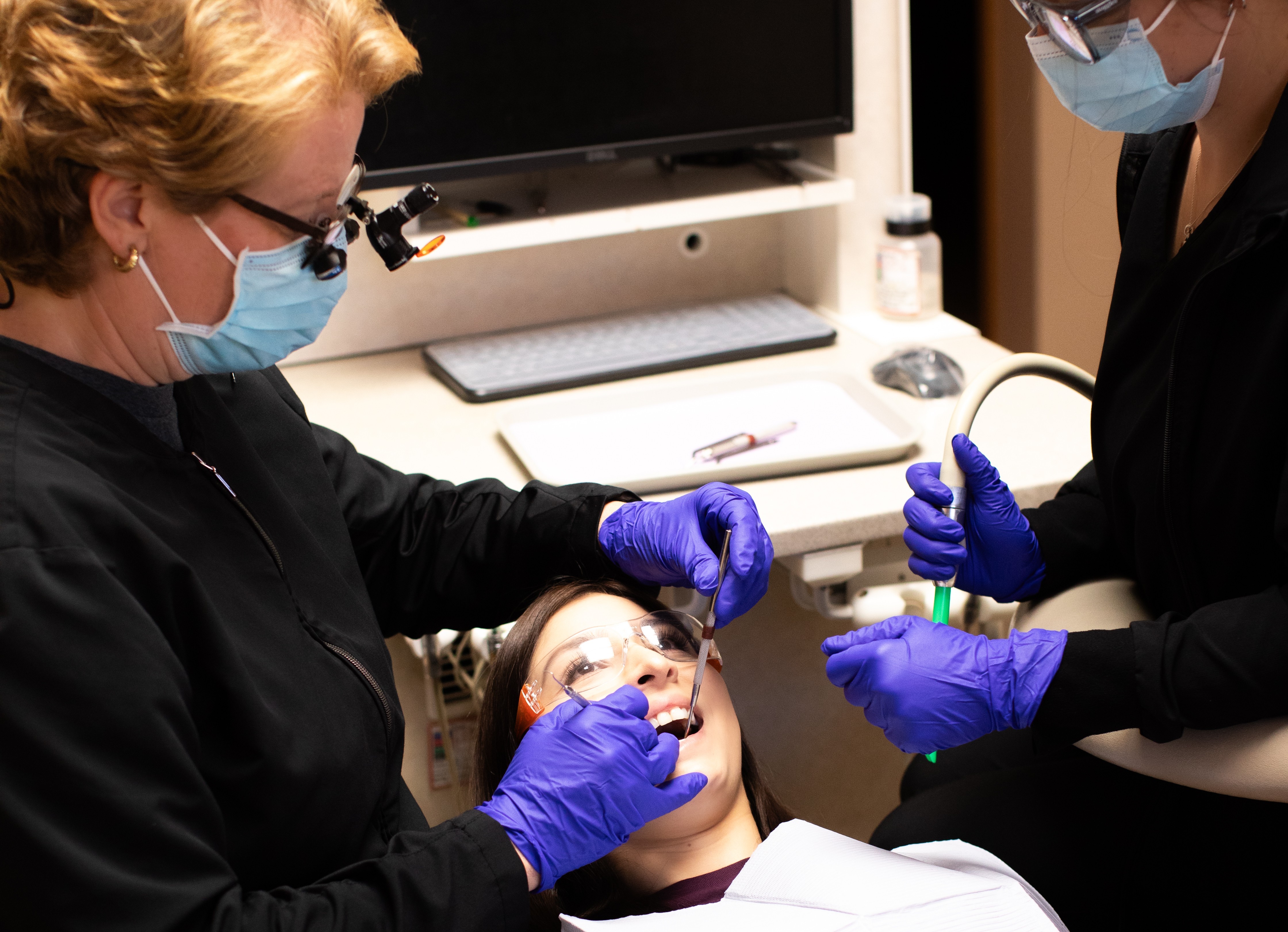
Our staff provides the highest level of care and attractive outcomes by using state of the art materials and advanced technology. Our goal is to always provide the most nurturing and supportive care possible for each and every patient. We want your dental experience to be exceptional, so we strive to never stop learning, growing and developing our practice.
Interested in more information? Fill out our New Patient Dental Service Interest Form!
Dental Service Interest Form
Services
| Appointment Reminders |
|
We use an appointment reminder system that will send you an email or text to remind you of your appointment. If you prefer, we can also call you one day before the appointment. Please choose which type of contact fits best into your schedule, and then let our office staff know your contact information.
Call to schedule an appointment today!
|
| Composite (White Fillings) |
|
Composites or white fillings are a conservative way to repair slightly chipped, discolored, or crooked teeth. A white filling material is placed onto your tooth to improve its appearance. The filling attaches by a process called dental bonding. The filling "bonds" with your teeth, and because it comes in a variety of tooth-colored shades, it matches the appearance of your natural teeth.
Composites can also be used in place of amalgam (metal or silver) fillings in certain cases. Many patients prefer bonded fillings because the white color is much less noticeable than the silver amalgam fillings. Composite fillings can be used on front and back teeth depending on the location and extent of tooth decay.
Composite fillings are less expensive than other cosmetic treatments and usually can be completed in one visit to our office. However, they can stain and are easier to break than other cosmetic treatments such as porcelain veneers. If it does break or chip, tell your doctor. The filling can generally be repaired in one visit.
|
| Crowns & Bridges |
|
Crowns and bridges are used to restore and enhance teeth that are damaged, or to take the place of missing teeth. A crown, also referred to as a cap, is used to entirely cover a damaged tooth. A crown not only strengthens a tooth, but it can dramatically improve a tooth's appearance.
Crowns may be used to:
- Replace a large filling when there is little tooth structure remaining
- Protect a weak tooth from fracturing
- Restore a fractured or cracked tooth
- Attach a bridge
- Cover a dental implant
- Cover a discolored or poorly shaped tooth
- Cover a tooth that has had root canal treatment
A bridge is a method to fill the space created by missing teeth. A bridge is one or more artificial teeth that are cemented into place using the teeth on either side for support, hence the name. This is an option for filling the space created by a missing tooth. A bridge replaces the missing tooth, both functionally and cosmetically. Bridge work is as much an art as it is an exact science. The materials used may be gold alloys, porcelain bonded to metal alloy, or all ceramic material made to match your natural tooth color. The choice of material depends on requirements for strength, wear, and/or personal preference. Crowns and bridges most often require two visits to complete.
|
| Dental Cleaning |
|
A dental cleaning is a professional cleaning you receive from a dentist or dental hygienist. Cleanings should be performed every three to six months to prevent excessive plaque buildup. Plaque left untreated can lead to unhealthy gums and tooth decay.
Services during a cleaning appointment include:
- Medical history
- Blood pressure
- Thorough exam of teeth and gums
- Jaw joint and bite evaluation
- X-rays
The cleaning portion of the appointment will be completed with handheld or ultrasonic instruments. Finally, we polish, floss and give a fluoride treatment to help prevent cavities. Most cleaning appointments take 50-60 minutes.
|

| Dentures |
|
A denture is a removable replacement for missing teeth and surrounding tissues. There are two types of dentures available, including partial and complete dentures. Partial dentures are used when some natural teeth remain, while complete dentures are used to completely replace all teeth. Dentures are made to resemble your natural teeth and in some cases even improve your smile!
Complete Dentures - This restoration method is used to restore your smile and mouth function if all your teeth have been lost. The dentures are custom created to resemble natural teeth and are positioned into a patients mouth to take the place of where the natural teeth used to be. Complete dentures are removable and may require adjustments in order to create a proper fit with the gums and mouth.
Partial Dentures - A removable partial denture is an appliance used when one or more natural teeth still remain in the upper or lower jaw. There are several types of removable partials and your dentist will discuss which one is best for you.
As dentists, we strive to save your teeth, but in some circumstances when tooth loss is inevitable, dentures can be the treatment of choice.
|
| Digital Imaging & X-rays |
|
X-rays are a focused beam of x-ray particles passed through bone which produce an image on special film, showing the structure through which it passed. This provides the familiar black and white images doctors and dentists use to diagnose problems and disease. X-rays of the whole tooth and supporting bone and gum tissues, help us detect disease and conditions that require attention.
In our office we use digital radiography which allows us to take x-rays using up to 90% less radiation than conventional film x-rays. Using this technology, we are able to take an x-ray of your mouth by using a small sensor which records the image of your teeth and we scan it in a computer to view it. The result is a highly detailed image of your mouth that can easily be enhanced to better diagnose dental concerns and determine the best treatment for each case.
|
| Tooth Extractions |
|
Good oral hygiene should always be practiced since the loss of a single tooth can have major impact upon your oral health and appearance. Although dentists will use every measure to prevent tooth loss, there are still some occasions when a tooth may need to be extracted. A tooth may need to be extracted if the following occurs:
- Severe decay
- Advanced periodontal disease or abscess
- Infection
- Orthodontic correction
- Malpositioned teeth
- Fractured teeth or roots
- Impacted teeth
After careful examination and treatment, the dentist may advise to have a tooth extracted. Before a tooth is removed, the dentist will take an x-ray in order to evaluate the shape and position of the tooth and surrounding bone. Based on the degree of difficulty, we may refer you to a specialist called an oral surgeon.
After your extraction, the staff will go over post op instructions with you to ensure proper healing.
|
| Fillings |
|
A filling is a way to restore a tooth damaged by decay back to its normal function and shape. If you have a tooth that requires a filling, the dentist will first remove the decayed tooth material, clean the affected area, and then fill the cleaned out cavity with a filling material. A filling also helps prevent further decay by closing off any cracks or spaces where bacteria can enter.
There are a variety of filling materials available including gold, silver, plastic and porcelain. The dentist will work with you to determine which material is best for you, depending on the extent of repair, the location of the filling in your mouth, and cost. Each of the filling materials is briefly explained below:
- Gold fillings are custom made in a laboratory and then cemented into place. While gold fillings are often the most expensive choice, many consider it the best filling material. Gold inlays are well-tolerated by gum tissues and may last more than 20 years.
- Amalgam (silver) fillings are a more inexpensive choice and are tolerant to wear. However, due to their dark color they are more noticeable than porcelain or composite restorations and are not recommended for fillings in very visible areas such as front teeth.
- Composite (plastic) resins are made to match the color of your natural teeth, creating a more natural appearance. While white fillings may be less noticeable than other materials, they usually only last between 3 and 10 years. They may not be ideal for large fillings on the front teeth as they may chip or wear over time. They can also become stained from coffee, tea or tobacco.
- Porcelain fillings are called inlays or onlays and are custom created in a lab and then bonded to the tooth. They can be matched to the color of the tooth and resist staining, but can be more abrasive than other options. A porcelain restoration generally covers most of the tooth, making the filling nearly undetectable. These fillings most often require two visits to complete.
|
| Periodontal (Gum) Treatment |
|
The gums, ligaments, and bone around the teeth form the foundation for one's teeth. All structures are also referred to as the periodontium. When the periodontium is not healthy (periodontal disease), it jeopardizes the teeth just as a bad foundation would threaten the stability of a house. Signs of unhealthy periodontium include: gums that are red and bleed easily, persistent bad breath, gums that are pulled away from the tooth, loose teeth, and changes in the position or bite of the teeth. Any of these may be a sign of a problem. With proper gum treatments, however, it may be possible to return gum tissue to a more healthy state. If you're having a problem, come in and see us so we may treat it right away. The treatment usually involves a deep cleaning or root plaining done under a local anesthetic. If the gum disease is severe it may need to be treated by a periodontist (gum specialist) and sometimes surgery is recommended. This is why it is important to have it treated at the first sign of a problem.
|
| Implant Restoration |
|
A dental implant is an ideal tooth restoration for people who are missing one or more teeth. A dental implant is a metal post that a periodontist or oral surgeon surgically positions into the jaw. Once in place and the bone surrounding the implant has healed, a replacement tooth is attached to the post. Implants can also attach to a full denture or removable partial to improve fit and comfort. While implants are typically more expensive than other methods of tooth replacement, they provide superior benefits. Implants are stronger than natural teeth and generally last 10-20 years. They are also a more favorable approach than bridgework since they do not depend on neighboring teeth for support.
To receive implants, you need to have healthy gums and adequate bone to support the implant. You must also be committed to excellent oral hygiene and regular dental visits as these are critical to the long-term success of dental implants.
|
| Intraoral Camera |
|
We use small cameras about the size of a pen, called intraoral cameras, to help clearly see the condition of your teeth and gums.
With this advanced technology we can zoom in on small diseased areas, cracks, chips and worn metal fillings with extreme precision. The full-color images taken with the intraoral camera are sent to a computer screen so we can clearly see and diagnose dental problems. Because images are displayed on our screens, patients will also be able to see areas being worked on and are able to gain a better understanding of dental procedures being performed.
|
| Laser Therapy |
|
There are many types of treatments that can be performed with a laser.
- Periodontal Treatment- If you are being treated for periodontal disease, laser therapy can reduce the bacteria and clean the diseased tissue allowing the area to become healthier.
- Hemostasis- Do you have an area that bleeds easily for you while you clean your teeth or while having your teeth cleaned? Treatment with a laser can eliminate bacteria and promote healing of the tissues in the area.
- Frenectomy- Do you have a space between your front teeth? Many times a strong muscle called a frenum holds the teeth apart. Some patients have braces to close the space, but it still wants to open up after the work has been completed. Clipping the muscle fibers can release the tension between these teeth allowing the teeth to stay together. Clipping these muscle fibers can also help prevent recession, or pulling away of the gum tissues from the teeth, in certain areas.
- Gingivoplasty- many times the gum tissues do not grow evenly and you will have an excess of tissue in an area. The laser can be used to contour the tissues and make them even in appearance. Have braces? Often while wearing braces, an excess of tissue accumulates as the spaces are closing. Removal of this tissue can make it easier for the patient to clean, which in turn makes healthier tissues.
- Bleaching- Bleaching or whitening of the teeth can also be completed with a laser. In office bleaching takes less time with the laser and there is less heat generated than with other forms of in office whitening, which can decrease your chances of sensitivity.
|
| Nightguards & Mouthguards |
|
Custom designed mouthguards and nightguards are made of flexible plastic and molded to fit the shape of your teeth. Mouthguards are recommended to protect the jaw and teeth during physical activity and sports such as boxing, football, basketball, or other activities where your mouth may get hit. In addition, these guards protect the soft tissues of your tongue, lips and cheek lining. Nightguards are also recommended for patients who clench or grind their teeth at night as a way to protect the teeth and it may relieve jaw pain.
If you have decided a guard is right for you, the dentist will take an impression of your teeth which will then be sent to a lab to make a custom fit guard for you. In some cases you can choose from a variety of colors and styles for your guard. On average, guards last between 3 and 10 years. If you currently have a mouthguard make sure you bring it to your appointment so the dentist can clean it and check the fit.
|
| Oral Hygiene |
|
Maintaining good oral hygiene is one of the most important things you can do for your teeth and gums. Healthy teeth not only enable you to look and feel good, they make it possible to eat and speak properly. Good oral health is important to your overall well-being.
Daily preventive care, including proper brushing and flossing, will help stop problems before they develop.
In between regular visits to the dentist, there are simple steps that each of us can take to greatly decrease the risk of developing tooth decay, gum disease and other dental problems. These include:
- Brush thoroughly twice a day and floss daily
- Eat a balanced diet and limit snacks between meals
- Use dental products that contain fluoride, including toothpaste
- Rinse with a fluoride mouth rinse if your dentist advises you to
- Make sure that your children under 12 drink fluoridated water or take a fluoride supplement if they live in a non-fluoridated area
|
| Paperless Charting |
|
Our office is a digital (paper-less) dental office. This means all x-rays and charting are made and recorded with the aid of the computer. This technology allows us to maintain your dental records electronically, and cuts down on paperwork used with traditional paper charting. Traditional paper charting is difficult to keep standardized from doctor to hygienist to assistant. Even handwriting differences and coding make the charts look different. The computer eliminates this problem by using consistent charting methods that are accurate and precise, making it easy to read your dental chart and see up-to-date information. Digital charting standardizes the charting process so it is clear, easy to understand, and enables us to provide on the most accurate and precise care to our patients. When needed, this method also allows us to quickly and securely share information with your other health care providers.
|
| Root Canal Treatment |
|
Root canal treatment (also referred to as root canal therapy or endodontic therapy) is necessary when a cavity reaches the pulp or nerve of the tooth. Sometimes deep restorations or trauma to a tooth may cause the nerve to be damaged to the point it needs root canal therapy. Once this occurs the pulp becomes infected, and can even extend through the root tip and begin to eat away at the surrounding bone which is called an abscess. By the time the pulp is infected it must be treated, and cannot heal on its own. The infection can weaken the entire immune system and can be dangerous if left untreated. Symptoms that the pulp has become infected may include sensitivity to hot/cold or sweets, pain, swelling, pain to biting or pressure, and a bad taste in the mouth.
Sometimes, however, no symptoms are apparent and the person is unaware of any problem until a checkup. A root canal is then performed to clean out the infected tooth pulp, and disinfect the canals of the tooth. The only other treatment would be to extract the tooth. Once the infection is resolved, the canal(s) are filled in to prevent any further infection. Usually a core build-up and crown is recommended for restoring a tooth that has had root canal therapy. Although root canal therapy cannot always be avoided, regular check -ups with x-rays can prevent many by detecting problems early.
|
| Sealants |
|
Sealants are used to fill in narrow grooves in a tooth that cannot be adequately cleaned by brushing. In some cases, the tooth structure has fine grooves or pits which accumulate plaque, not because the person doesn't brush, but because they're too narrow to allow even one bristle into them. These areas can develop cavities over time. The dentist or hygienist will brush on a coating that seals the grooves and pits, making it possible to brush off all the plaque and keep your teeth healthy.
|
| Telescopic Loupes |
|
The dentist performs most of the dental procedures while wearing a pair of surgical telescopes. These powerful glasses have magnifiers on them, allowing the dentist to see fine details that would go unnoticed to the naked eye.
|
| TMJ Treatments |
|
TMJ stands for temporal-mandibular joint. Temporal, as in temple area of skull; mandibular as in mandible, or lower jaw; joint as in it is where the head and jaw meet. Problems in this joint may be caused by a misalignment of the teeth, trauma, or excess muscle tension. Aside from the two bones that meet there, cartilage buffers them and five muscles are involved in the area. If something goes wrong a good deal of trouble can result.
Problems in this area can cause:
- • Headaches
- • Earaches
- • Trouble/soreness in opening and closing the mouth
- • Clicking or popping of the jaw
- • Pain in the jaw muscles
- • Soreness in the area, sometimes extending to the face
Dental treatments for the condition can include replacing missing teeth, moving teeth, adjusting the bite, filling gaps between teeth, etc. There is no one solution that is right for all cases. Sometimes a plastic mouthpiece is used to prevent clenching or grinding that is contributing to the problem. If untreated and taken to extremes, surgery may be required to repair a badly damaged joint.
|
| Veneers |
|
Veneers are a dental procedure in which a covering is placed over the outside (visible area) of the tooth. Veneers are usually only done to the part of the teeth that are visible when talking or smiling. The procedure can be direct or indirect.
The direct technique usually involves bonding composite, a white filling material, on the outside of the tooth to reshape the tooth for a more pleasing appearance.
The indirect technique usually involves two appointments because the veneers will be fabricated at a dental laboratory. At the first appointment the teeth are prepared, impressions taken, and the teeth are given a temporary covering. In two to three weeks the veneers are back from the laboratory, the temporaries are removed and the veneers are bonded to the teeth. The laboratory fabricated veneers are usually made using porcelain or pressed ceramic, and are visually pleasing. The advantage of veneers versus crowns is that less tooth material is removed.
|
| Whitening |
|
Tooth whitening is a popular procedure to make teeth whiter and brighter, and therefore more attractive. Bleaching can be used to whiten stained and discolored teeth, or simply to enhance a dull smile. Either way, tooth whitening is a safe and relatively simple procedure ideal for most patients. Our office offers several methods of whitening: whitening strips, in–office whitening and tray whitening.
Whitening strips have bleach on a soft flexible material that molds to your teeth. You wear the strips once or twice a day for a period of two to three weeks. The strips come in kits that have instructions to explain how to get the best results. The staff can also answer any questions you may have. The advantage to strips bought at the dental office, versus over the counter, is they have a higher concentration of the active ingredient, giving you a better and faster result.
In-office whitening is an ideal procedure for anyone wanting immediate results. Because the entire procedure takes place in our office in a little over an hour, it is the perfect choice for busy individuals. In this process, a protective gel is applied to your gums to protect the soft tissue. A special light-activated gel is then applied to your teeth and a special light or laser is used to enhance the action of the agent. We give you instructions for keeping your smile bright. The result is noticeably whiter teeth.
Tray whitening is a less expensive option than in–office whitening, and you can use it while in the comfort of your own home to gradually whiten your teeth. We will first take an impression of your teeth to create a customized clear tray that you will wear. At a second appointment, your trays will be ready to be picked up and we will show you how to apply the special bleaching material to the trays. The whitening gel trays should be worn a few hours a day or overnight. After the first few days you will start to notice a brighter and whiter smile, but don’t stop now. We recommend bleaching for a few weeks, so the results will last longer. Occasional treatment can be used at your convenience to maintain your new smile.
|
Partnership with Dental Care, PC
To bring this vision to life, MCMH has partnered with Dr. Kim Truka, DDS, and the team at Dental Care, PC.
On May 27, 2026, the MCMH Board of Trustees approved the acquisition of Dental Care, PC, bringing Dr. Truka's established dental practice, patients, and staff into the MCMH family. This partnership creates a strong foundation for expanding dental services throughout the region while preserving the trusted relationships Dr. Truka has built within the community.
Click Here for Dental Patient Resources